
As AuDHDers, how do we judge and trust when enough is enough?
Updated: Aug 23
*no AI is used in the making of this post - it's all my own scattered thoughts :)
The concluding reflection - If our internal signals are difficult to interpret, and external people keep reassuring us we're fine, whose judgement am I supposed to trust?
Let me explain: Two weeks ago, I ended up in hospital for three days, on IV fluids and kidney monitoring. And it was a strange journey full of interesting reflections along the way.
It started with quite an intense exercise class. Not cardio-demanding by any means, but a continuous pace of dangling upside down, pulling up our own body weight, kind of class. For someone quite heavily built, it proved to be too much. Now this is not a blaming blog, by any means; accidents happen, and there were many factors at play. But the ones I am most interested in are the intersectionality between being a woman of a certain age, who is AuDHD, medical awareness, trust in oneself, and the cultural agreement to just ‘push through and endure’. and the consequences afterwards – even with extensive awareness and knowledge.
So of course, being autistic, I am a natural rule follower: tell me I need to do something that I do not have the knowledge or insight to disagree with, such as do a certain amount of reps, and I will do it – or (literally nearly) die trying. Because I have interception difficulties, I also cannot tell if my body has had enough until it literally gives up. Which, after 45 minutes of trying to wrench my body weight up and around, it had. I finally recognised this when my arms and shoulders were literally unable to lift or follow the rules anymore. I think this feeling needed to be picked up on about 20 minutes before.
What followed was also curious.
The day after, I felt I had been hit by a bus; I couldn’t lift my arms, twist or pull. Being an ex-gymnast for over ten years, I knew I had pulled muscles badly. So it was rest, continuous moaning, and nervous system dysregulation. By Monday I was ill. I was sweating, lethargic, couldn’t think properly, feeling sick and thinking I really pondering whether I should be working… unfortunetaly like most people when there is the social and economic obligation, clashing with health needs. However, this is where it gets interesting.
Thanks to AI (rarely do I say that), as I asked it whether it was ok to return to gymnastics tomorrow (even though I couldn’t get dressed or go move properly, so it was realistically a no; even if I'd just pulled muscles), it stated, yes, as long as you haven’t had any two specific conditions (I had) and was feeling ok (I was not). Well, I won’t go into detail, but needless to say this was something I had noticed as an extreme earlier that day. But while curious, the specific illness was very rare and unusual, and there is little time to stop and notice every difficulty I am experiencing in a day. The clock turns regardless. Anyway, what followed were two days of 111 calls, GP visits, and blood tests, all telling me to monitor at home, and I'll be fine (111 Monday evening). But during assessments, I was very aware that all the symptoms that could show needing URGENT hospital treatment were also signs of being a perimenopausal AuDHDer, who has learned to power through. Sweats? Yes, but I’m 44. Fatigue? Yes, I am doing a PhD, running a business, and it is hot today. Brain fog? Er, you joking? I have ADHD and again, 44. Kidney pain? I think so, but it could be my bad back due to being, again, old (apparently). But I am feeling REALLY ill. Like I can’t think straight; I am cold but sweating and just feeling really run down. The verdict: you are probably fine. My closest telling me I’m fine – but I don’t blame them, being AuDHD and of course unmasked around them, means they see all the discomfort as it arises: the sensory overload, the executive dysfunction, the OCD linking with ADHD rumination and getting stuck in loops, IBS, and bodily reactions to the discomfort – in fact, it was really understandable they were again saying I am ok, and being reassuring, especially as the condition is so rare. And me? A lifetime of my own internalised ableism from how I was brought up, being told I am being dramatic and attention seeking (like a lot of you can relate), I realised I can’t tell when something is severe or just normal daily functioning discomfort, and apparently no one else can trust me when I say things aren’t right.
I feel ill, when I start to burn out, get tired, the heat, muscle aches, social exhaustion, in the luteal phase – which I was. Recognising and challenging the internalised ableism I have absorbed from my families voices telling me to stop being dramatic, with eye rolls (we all have these voices that are not our own), has meant it blurs my trust in myself that I am not ok. I am fortunate, I am a good advocate for myself, but I also listen to others' observations. Because being an AuDHDer, it is so hard to recognise what the heck is going on sometimes. Honestly, I knew I was ill, I knew I was not right, hence I pushed tests regardless of what I was told, but with 111 and my partner on Monday saying just monitor, GP on Tuesday (which I pushed for) saying I’m fine, on Wednesday, when I felt so rough I thought I should probably cancel work - however, I do not do this unless it is an emergency, because the job I do, means it can really create dysregulation for those needing sessions. And so, not deeming this was an emergency, I carried on. Even went for a midday swim on Wednesday, feeling rough but genuinely believing that I was ok, and these were normal AuDHD, hormonal grumbles. Being a therapist and the responsibility we hold, adds its own complications to the mix here, and I recognise that, but this is not a blog about the reflections of being a counsellor; it is about the reflections of being a 44-year old female AuDHDer, actively on the road to potentially dying, in this society where we are expected to push on.
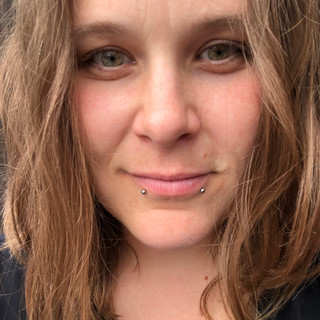
And so, there I was, with CK of 23,000, sat on IV fluids for three days while my kidneys were monitored for permanent damage. On the second day, with a cannula in my hand and sitting in a ward, I continued to cancel sessions for the following days, review my RF2 for my PhD, and finish off my admin. It was only when a nurse asked what I was doing with a concerned eyebrow, continuing to ask if I felt well, and I stated I felt like a Zombie, that I questioned how working was being viewed. In a world where we are constantly under assault of various discomforts, masking to exist, with ever-changing bodily symptoms, with interoception difficulties, and a system designed for pushing through and attributing illnesses to hormones – how do we know when to stop? While also acknowledging the needs of an ADHDer, and as a counsellor. I get restless EASILY and find joy in completing admin/closing mind tabs, and so will get naturally pulled towards it. I recognise that the photo and me continuing to work through being ill may raise some questions, but I argue for the understanding of the complex paradox of needs. My needs as an ADHDer needing to close tabs, and of being the sole one responsible for my admin and clients' wellbeing, can coexist naturally. If I am well enough, I will not be leaving clients attending empty sessions, left with uncertainty. How to manage critical illness verses our policy for complete incapacitation when in private practice, is a discussion now currently in supervision :) and honestly, what does rest look like? For many of us, rest comes from closing the ruminating tabs/loops, and the picture captures all of the nuances of my reflections. From capitalist expectations, AuDHD needs, social constructs, and the clash of interoception difficulties, daily discomfort and learning to just carrying on regardless.
And lets be honest, I am ridiculously aware of my ND needs, my trauma messages, my masking behaviours, and I have learnt to advocate for myself (and then manage the retrospective RSD loops), and I still could have suffered the worst fate if I did not take the steps to get myself checked. The conclusion – the demand to carry on existing regardless of needs and pain- needs to be challenged, because I recognise this was my weakness in not getting the emergency help I needed, and I know I am not alone. This was just one of the most poignant experiences I’ve had as an adult, with all the difficulties coexisting and at play all at once, which could have resulted in genuinely dire consequences.
....and so, If my internal signals are difficult to interpret, and external people keep reassuring me I am fine, whose judgement am I supposed to trust? Because on Wednesday evening, the Doctor at the hospital told me I should have trusted my own intuition and come in Monday :/



Comments